
...

What Is a Meat Mixer and How Does It Work?

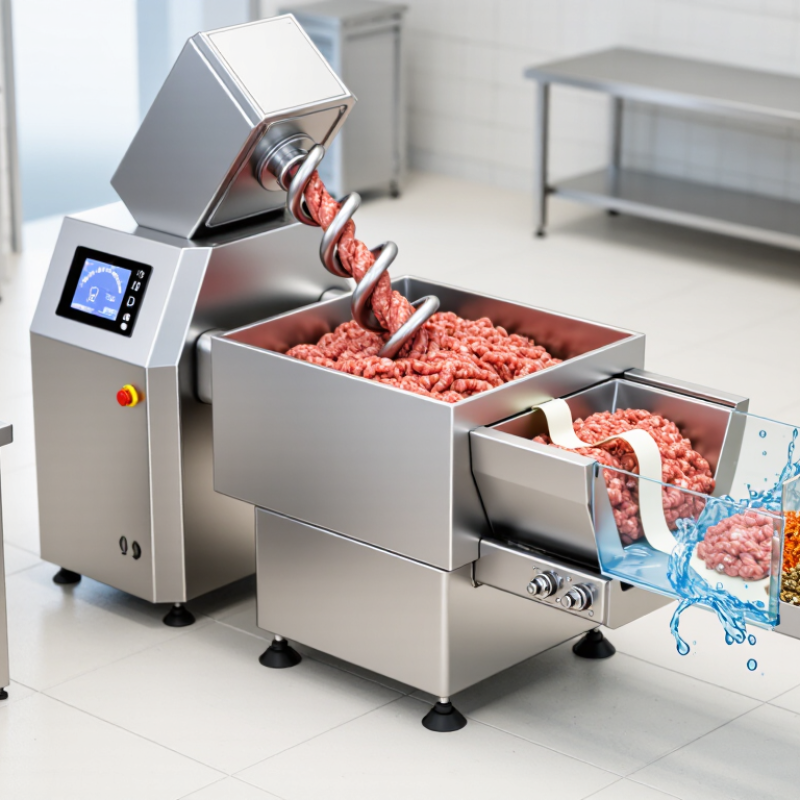
A Meat Mixer is a practical machine behind many uniform sausages, burgers, meatballs, and prepared meat products. It combines minced meat with salt, spices, water, fat, and functional ingredients. Inside the stainless-steel chamber, paddles or ribbons fold the mixture repeatedly. The goal is even distribution without damaging texture or creating excessive heat.

The process looks simple. It is not always simple.

The OECD-FAO Agricultural Outlook 2024–2033 projects global meat production to approach 382 million tonnes by 2033. This growth increases pressure on processors to improve consistency, throughput, and traceability. Industry research from Grand View Research also identifies automation, hygiene, and production efficiency as major trends in meat-processing equipment. A modern Meat Mixer supports these needs through controlled mixing time, adjustable speed, temperature monitoring, and easier cleaning access.

Temple Grandin, a widely recognized authority in meat-processing and livestock systems, often applies a practical principle: “Make it easy to do the right thing.” That idea fits mixer design closely. Smooth internal surfaces, hygienic welds, and accessible components reduce cleaning mistakes. Accurate weighing systems reduce formulation errors. Still, equipment alone cannot guarantee quality. Poor loading order, excessive mixing, or weak sanitation procedures can undermine an expensive machine. That is an uncomfortable detail. Operators must understand both the equipment and the product. This guide explains what a Meat Mixer does, how its working parts interact, and why small operating choices can change texture, yield, and food-safety performance.
What Is a Meat Mixer and How Does It Work?

Meat Mixer Types and Typical Batch Capacities of 20–5,000 kg

What Is a Meat Mixer and How Does It Work?

Meat Mixer Types and Typical Batch Capacities of 20–5,000 kg

A meat mixer combines ground meat with salt, seasonings, water, and other approved ingredients. Its paddles, ribbons, or arms rotate inside a stainless-steel chamber. This movement spreads ingredients evenly without crushing the meat excessively. Operators usually load the vessel below its maximum rating. A practical working fill may reach 60–80% of the chamber volume.

Paddle mixers suit general sausage and ground-meat production. They provide gentle movement and controlled mixing. Ribbon mixers handle thicker blends and larger ingredient loads. For smaller operations, compact mixers commonly process batches from 20 to 100 kg. Medium machines often manage 100–500 kg per batch. Industrial models may process 500–2,000 kg, while large continuous systems can reach 5,000 kg.

Capacity figures can mislead.

A 500 kg rating does not guarantee the same output for every recipe. Sticky mixtures, frozen particles, and high liquid content can change motor demand. The mixing time also depends on blade design, temperature, and loading order. In practice, operators should check torque, discharge speed, and batch consistency during trials. A mixer that looks efficient may still leave seasoning near the corners. That detail is easy to miss. Hygienic welds, drainable surfaces, sealed bearings, and easy access for cleaning also deserve careful inspection before purchase.

What Is a Meat Mixer and How Does It Work?

Meat mixers combine ground meat with seasonings, fat, brine, or other ingredients through rotating paddles, ribbons, or shafts. The chart shows representative lower and upper batch-capacity ranges commonly associated with different mixer designs.

Actual capacity depends on mixer volume, product density, fill level, recipe viscosity, and required mixing time. These ranges are general industry reference values rather than fixed equipment specifications.

Core Components: Shafts, Paddles, Troughs, and 10–60 rpm Drives

What Is a Meat Mixer and How Does It Work?

A meat mixer combines minced meat, fat, water, salt, and seasonings evenly. Its main parts control the mixing pattern. Shafts carry the paddles through the trough. Paddles lift, fold, and compress the mixture. A single shaft suits gentle blending, while twin shafts create stronger movement. The trough holds the batch and should have smooth, cleanable surfaces. USDA FSIS sanitation guidance emphasizes accessible equipment surfaces and effective cleaning procedures.

Drive speed matters. Most industrial meat mixers operate between 10 and 60 rpm. Lower speeds reduce smearing and protect visible fat particles. Higher speeds shorten mixing time but can raise product temperature. A 2024 report from Grand View Research valued the global meat processing equipment market at over 10 billion U.S. dollars. That scale shows why repeatable control matters. Still, a larger mixer is not automatically better. Poor paddle clearance can leave seasoning trapped near the corners.

Tips: Check the batch temperature before and after mixing. Keep the motor below its rated load. Inspect shaft seals for leaks. Operators should also watch the discharge area. A small buildup can change the next batch. One detail is easy to miss: mixing time depends on fat firmness, fill level, and ingredient order. Standard settings help, but they are not perfect. Record each batch and question unusual texture, noise, or temperature changes.

Loading Sequence and Mixing Cycles Typically Lasting 5–15 Minutes

A meat mixer combines ground meat, fat, seasonings, water, and functional ingredients into a consistent blend. Loading sequence matters. Operators commonly add lean meat first, followed by fat, chilled liquids, seasonings, and binders. This order helps distribute small ingredients before the mixture becomes dense.

Keep the product cold.

The USDA Food Safety and Inspection Service identifies 40°F (4.4°C) as an important refrigeration benchmark for raw meat handling. A mixer should be loaded quickly, not packed beyond its working capacity. Overloading can create dry pockets, uneven seasoning, and excessive friction. Those problems are easy to miss during a rushed production shift.

Typical mixing cycles last 5–15 minutes. Short cycles may suit fine particles and small batches. Longer cycles may be needed for larger loads or stronger protein extraction. The operator should watch texture, temperature, and motor load, rather than trusting the timer alone. A pale, sticky surface can indicate sufficient protein development, but appearance is not a complete test.

The FAO Food Outlook 2024 estimated global meat production at about 374 million tonnes, showing the scale of modern processing demand. At that volume, repeatable loading and mixing records become essential. Still, the 5–15-minute range is only a starting point. Fat temperature, blade design, fill level, and batch formulation can change the result. In practice, operators sometimes stop too late, believing more mixing always improves consistency. It may not.

What Is a Meat Mixer and How Does It Work? - Loading Sequence and Mixing Cycles Typically Lasting 5–15 Minutes

A meat mixer combines ground meat, seasonings, liquids, and functional ingredients to produce a more uniform blend before forming, stuffing, or packaging.

Data Dimension Typical Value or Range How It Works Operational Considerations
Primary Function Uniform blending of meat and ingredients Rotating paddles, ribbons, or arms move the product through the vessel, combining ingredients and distributing moisture, fat, salt, and seasonings. The mixer should achieve an even blend without excessive smearing, temperature rise, or mechanical damage to the product.
Common Mixer Designs Horizontal paddle, ribbon, or dual-shaft mixer Horizontal designs generally move product along a trough, while dual-shaft systems create opposing product flows for more intensive mixing. The selected design depends on batch size, product texture, ingredient loading, and the required degree of protein extraction.
Typical Working Capacity Approximately 25–80% of vessel volume The usable batch size is lower than the vessel's total geometric volume because the product needs space to circulate and turn over. Overfilling can create dead zones and uneven seasoning; underfilling may reduce mixing efficiency and increase product residence time.
Loading Sequence: Base Product Ground or diced meat is usually loaded first The meat forms the main matrix into which dry seasonings, liquids, binders, and other ingredients are incorporated. Raw materials should be weighed accurately and kept within the target temperature range specified by the food-safety plan.
Loading Sequence: Dry Ingredients Salt, spices, sugar, curing ingredients, and dry binders Dry ingredients are added after or during the initial movement of the meat so they can disperse across the product rather than remain concentrated in one area. Powders should be free-flowing and added in a controlled manner to reduce clumping and localized over-seasoning.
Loading Sequence: Liquids and Ice Water, brine, marinades, or ice may be added gradually Liquid ingredients are distributed by the moving paddles or arms; ice can help control product temperature while contributing water as it melts. Gradual addition generally improves absorption and helps prevent pooling at the bottom of the mixer.
Initial Mixing Cycle About 2–5 minutes A short initial cycle begins distributing seasonings and liquids through the meat before the final blend develops. Operators commonly inspect the product for dry pockets, liquid accumulation, and uneven ingredient distribution.
Main Mixing Cycle About 5–15 minutes total for many batches The mixer continues to turn and fold the product until the blend reaches the desired uniformity and texture. Actual time varies with formulation, batch size, temperature, mixer geometry, paddle speed, and the required protein extraction level.
Mixing Speed Commonly controlled from low speed to moderate speed Lower speeds provide gentler folding, while higher speeds increase circulation and shear. Speed should be high enough for complete turnover but low enough to limit smearing, air incorporation, and unnecessary heat generation.
Vacuum Mixing Option Available on some sealed mixer configurations Air is removed from the vessel during mixing, which can improve product density and reduce visible air pockets. Vacuum operation requires a sealed lid, suitable product consistency, and correct control of vacuum level and cycle timing.
Temperature Control Product is generally kept cold throughout processing Mechanical work can increase product temperature, while chilled meat, ice, or refrigerated ingredients help offset that increase. Temperature limits should follow the facility's validated food-safety procedures and applicable regulations.
Mixing End Point Uniform color, seasoning distribution, and cohesive texture The batch is considered ready when ingredients are evenly dispersed and the product has reached the formulation's desired bind or tackiness. Excessive mixing can damage texture, increase temperature, and create a paste-like appearance in products intended to remain coarse.
Discharge Method Bottom, side, or tilting discharge After mixing, a gate or tilting mechanism moves the finished blend into a hopper, tote, conveyor, stuffer, or forming line. The discharge path should minimize product retention, contamination risk, and unnecessary handling.
Typical Applications Ground meat, sausage, meatballs, patties, fillings, and seasoned blends The mixer can combine meat with salt, spices, water, binders, vegetables, or other formulation ingredients. Ingredient compatibility, particle size, moisture content, and desired final texture determine the appropriate cycle.
Cleaning and Sanitation After each production run or according to the sanitation schedule Product-contact surfaces are emptied, disassembled where required, washed, rinsed, sanitized, and inspected. Effective sanitation depends on hygienic equipment design, accessible surfaces, correct chemical concentration, contact time, and documented verification.
Key Quality Checks Appearance, temperature, weight, texture, and ingredient distribution Operators compare the batch with approved specifications and may sample multiple locations within the vessel. Consistent weighing, loading, cycle timing, and discharge practices improve repeatability between batches.

Note: Mixing times and capacity ranges are general operating guidelines. The correct settings must be established through product trials, equipment instructions, formulation requirements, and the site's food-safety procedures.

Vacuum Mixing at 80–95 kPa for Better Density and Air Removal

What Is a Meat Mixer and How Does It Work?

A meat mixer combines ground meat, fat, water, salt, and seasonings into a consistent mass. Paddles or ribbons turn the batch inside a stainless-steel chamber. Their movement spreads ingredients while limiting excessive crushing. In vacuum mixing, a pump removes air from the chamber during agitation. The target may be 80–95 kPa of vacuum, but operators must confirm the gauge reference. Some instruments show negative pressure. Others display absolute pressure.

Less trapped air means fewer visible pockets and a denser finished texture. The mixture also contacts seasonings more evenly. This can improve slice appearance and reduce loose spots during cooking. At the start, I check the chamber seal, gasket, and filter. A small leak can make the reading look acceptable while air continues entering. That mistake is easy to miss.

Temperature control remains important. Mixing creates friction, so the meat should stay cold throughout the cycle. I monitor product temperature, vacuum stability, mixing time, and batch weight. Too much mixing can produce a pasty texture. Too little mixing leaves dry seasoning areas. A practical test is to inspect a cut sample under good lighting. It should show a compact structure without large air channels. Results can vary with fat level, particle size, and ingredient temperature. My own process records are useful, but they are not universal rules. Calibration and repeated trials still matter.

Sanitary Design: 304 Stainless Steel and 3-A Hygienic Standards

What Is a Meat Mixer and How Does It Work?

A meat mixer combines minced meat, fat, salt, spices, and other ingredients evenly. Paddles rotate inside a horizontal stainless-steel tank. Their movement folds the mixture instead of crushing it. This helps maintain texture, temperature, and consistent seasoning. In production, operators should monitor batch temperature closely. Warm meat can soften fat and reduce product quality.

Sanitary design deserves equal attention. Food-contact parts should use 304 stainless steel, which resists corrosion and supports routine cleaning. However, 304 stainless steel is not a magic shield. Deep scratches, poor welds, and trapped residue can still create hygiene risks. 3-A Sanitary Standards and Accepted Practices emphasize smooth surfaces, cleanable joints, proper drainage, and limited product-holding areas. The FDA Food Code 2022 also requires food-contact surfaces to remain smooth, durable, and easily cleanable. These principles matter because the CDC estimates that foodborne illness causes about 48 million illnesses and 128,000 hospitalizations annually in the United States. A mixer’s design cannot replace disciplined sanitation.

Tips: Inspect welds and paddle clearances after every deep-cleaning cycle. Check for residue beneath seals and around discharge gates. Keep cleaning records, but question them when visual inspection disagrees. That small doubt can prevent a larger problem. Rotate paddles slowly during initial loading, and avoid overfilling the tank. Follow the equipment maker’s validated cleaning procedure and your facility’s food-safety plan.

ICB_lOGO_2023