Top Brow Lamination Kit Suppliers for Global Buyers
The global beauty market is expanding, but brow products remain a specialized purchasing category. McKinsey’s 2023 beauty report estimated the global beauty market at about US$430 billion in 2022. It also projected annual growth of approximately 6% through 2027. These figures include skincare, haircare, cosmetics, and fragrances. They do not isolate brow lamination products. That limitation matters.
A reliable supplier search therefore requires more than comparing unit prices. Buyers should examine formula documentation, ingredient lists, batch records, packaging quality, and professional-use instructions. A suitable Brow Lamination Kit should support consistent processing, clear timing guidance, and safe storage. Details matter. Think sealed sachets, readable lot codes, and bottles that do not leak during international transit.
Grand View Research continues to identify cosmetics and personal care as major growth sectors, supported by premiumization and professional beauty services. Meanwhile, ISO 22716 remains a widely recognized reference for cosmetic Good Manufacturing Practices. Requirements still differ between markets. Buyers may need additional documentation for labeling, responsible-person obligations, product notification, or import clearance.
Supplier claims deserve careful checking. A factory may show impressive certifications, yet provide weak traceability. That happens. Independent testing, sample evaluation, and a small pilot order can reveal practical problems before scale purchasing. This guide reviews leading Brow Lamination Kit suppliers for global buyers, considering manufacturing experience, quality systems, customization, documentation, communication, and export reliability. No supplier is perfect. The strongest choice depends on destination-market rules, product positioning, and the buyer’s tolerance for operational risk.
Understanding Brow Lamination Kits and Their Main Components
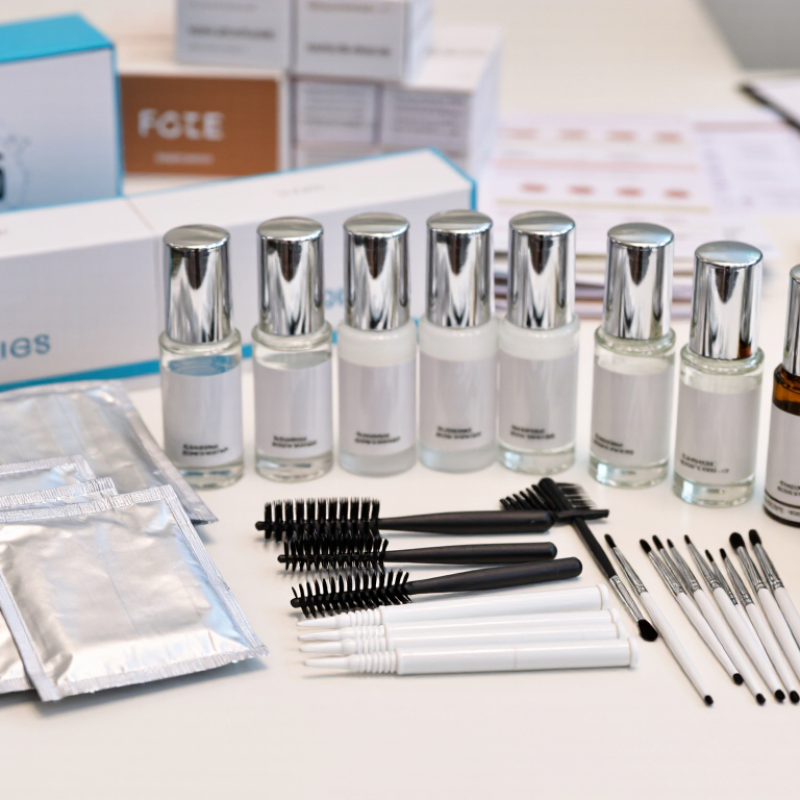
A brow lamination kit usually contains a lifting lotion, a setting solution, and a nourishing product. These steps help soften brow hairs, guide them into a chosen direction, and support a neat finish. Small tools matter, too. A spoolie separates hairs, while an applicator helps place product with more control. Some kits include shields, mixing dishes, or disposable brushes. Check what is included before comparing suppliers; a low price can hide missing essentials.
For global buyers, clear labeling is as important as a complete kit. Look for ingredient lists, batch details, storage guidance, and instructions written in plain language. Product consistency matters. A lotion that spreads evenly is easier to handle than one that feels watery or clumps on the brush. Still, packaging alone cannot prove performance. Request samples and assess them under realistic working conditions. Patch testing and careful timing should follow the product’s directions, since brow skin can be sensitive. This part is easy to rush. It should not be. Supplier communication also deserves attention: ask how components are protected from leaks, heat, and moisture during shipping. Even a well-designed kit can disappoint if its instructions are vague or its contents arrive damaged.
Key Criteria for Evaluating Global Brow Lamination Kit Suppliers
Top Brow Lamination Kit Suppliers for Global Buyers
Choosing a brow lamination kit supplier takes more than comparing prices. Check whether the supplier provides clear ingredient lists, batch identification, and practical storage instructions. These details help buyers assess consistency before placing larger orders. Ask for product samples and inspect the packaging, labels, and included tools. A clean applicator layout matters when kits are handled in busy salons. Small details count.
Reliable suppliers should explain how they control quality between production runs. Request recent test documentation relevant to product safety and stability, and confirm that claims match the documents. Ask how they handle damaged goods, delayed shipments, and changes to product specifications. Straight answers are a good sign. Vague assurances are not. Shipping capacity also deserves attention: a low unit price can lose value if cartons arrive late or poorly protected.
Communication is part of supplier evaluation, too. A dependable contact should answer technical questions in plain language and provide realistic lead times. Check whether packaging options, minimum order quantities, and replenishment schedules fit your market. For global buyers, clear export paperwork and responsive logistics support reduce avoidable delays. I would not rely on a polished catalogue alone; it cannot show how a supplier responds when something goes wrong. That judgment takes time, and even careful buyers can miss a weak point.
Top Brow Lamination Kit Suppliers for Global Buyers
Key criteria for evaluating global brow lamination kit suppliers
Illustrative evaluation framework: weights represent suggested buyer priorities and total 100%. Assess product safety documentation, ingredient transparency, and regulatory support for the destination market; verify quality systems, lead times, and customization capabilities directly with each supplier.
Leading Supplier Types and Their Product Specializations
Top Brow Lamination Kit Suppliers for Global Buyers
Leading Supplier Types and Their Product Specializations
Direct manufacturers usually serve salons, distributors, and high-volume buyers. They specialize in complete systems, including lifting lotion, setting lotion, nourishing serum, and applicators. Experienced buyers should request batch records, ingredient specifications, and stability information before placing large orders. Small details matter.
Private-label manufacturers focus on customization. They can adjust packaging sizes, instruction sheets, color themes, and kit combinations for different markets. Some also offer low minimum order quantities, which helps new retailers test demand. However, lower order volumes may increase unit costs. That trade-off deserves careful review.
Specialized formulation suppliers often develop sensitive-skin or professional-strength products. Their expertise may include controlled processing times, fragrance-free options, and consistent cream texture. Distributors, by contrast, provide mixed cartons and faster access to established product categories. They may simplify logistics but offer less control over formulas and packaging. Accessory suppliers complete the workflow with precision brushes, silicone shields, mixing dishes, and storage pouches. Practical testing is essential. A kit may look complete yet perform poorly if shields curl or brushes shed fibers. Buyers should examine packaging seals, multilingual instructions, carton durability, and documented quality checks. Export experience helps, but it does not replace independent product evaluation. Even reliable suppliers can have occasional inconsistencies between batches. That possibility should remain part of the purchasing plan.
Ordering, Customization, and After-Sales Support for Global Buyers
For global buyers, a reliable brow lamination kit order starts with a clear specification sheet. List kit components, unit quantities, packaging dimensions, and preferred labeling languages. Ask suppliers to confirm minimum order quantities, sample costs, production lead times, and shipping terms in writing. Small details matter: a missing applicator or unclear carton count can delay receiving checks.
Customization can include carton design, instruction inserts, and private-label packaging. Request a pre-production sample and review the print quality, seal, and readability of each instruction step. If formulas or components may vary by destination, ask the supplier for current ingredient information and available product documents before placing a large order. Custom packaging is useful, but it can add approval time and cost. A polished box cannot fix a confusing instruction sheet.
After-sales support deserves the same attention as pricing. Confirm how the supplier handles damaged shipments, missing items, and product-quality concerns. Keep order records, batch details, and photos of any issue; these make follow-up more precise. Ask for a named contact and a realistic response window. Support may not resolve every delay, but a documented process helps buyers plan replenishment with fewer surprises. One thing is easy to overlook: test the full ordering and support process with a modest first order.
 Skip to content