
...

China Top Luggage Replacement Wheels Suppliers?

Finding reliable China top luggage replacement wheels suppliers requires more than comparing catalog prices. A damaged wheel can make a suitcase drag, wobble, or fail during a crowded airport transfer. Buyers should examine wheel diameter, axle width, housing design, bearing quality, rubber hardness, and load capacity. These details determine whether the replacement fits and survives daily travel.

Chen Wei, a luggage hardware engineer with more than fifteen years of manufacturing experience, says, “A replacement wheel is successful only when fit, movement, and durability work together.” His point is practical. A supplier may offer smooth samples but inconsistent production batches. That weakness deserves attention. Ask for technical drawings, material information, sample testing, and clear quality-control records. Factory photographs can help, but they are not proof.

Strong suppliers usually explain compatibility instead of promising universal fit. They should discuss spinner wheels, inline wheels, caster assemblies, and common suitcase brands. Buyers can test rolling noise, side movement, screw strength, and performance on tile, carpet, and rough pavement. Small details matter. A loose axle can become a serious travel problem.

Supplier verification should also include production capacity, export experience, packaging protection, replacement policies, and communication speed. I would not choose the lowest quotation automatically. It may hide weaker bearings or thin mounting plates. Still, no supplier is perfect. Even experienced buyers should request samples before placing a large order. This guide reviews China-based luggage replacement wheels suppliers through practical, measurable criteria, helping importers make a more confident decision.
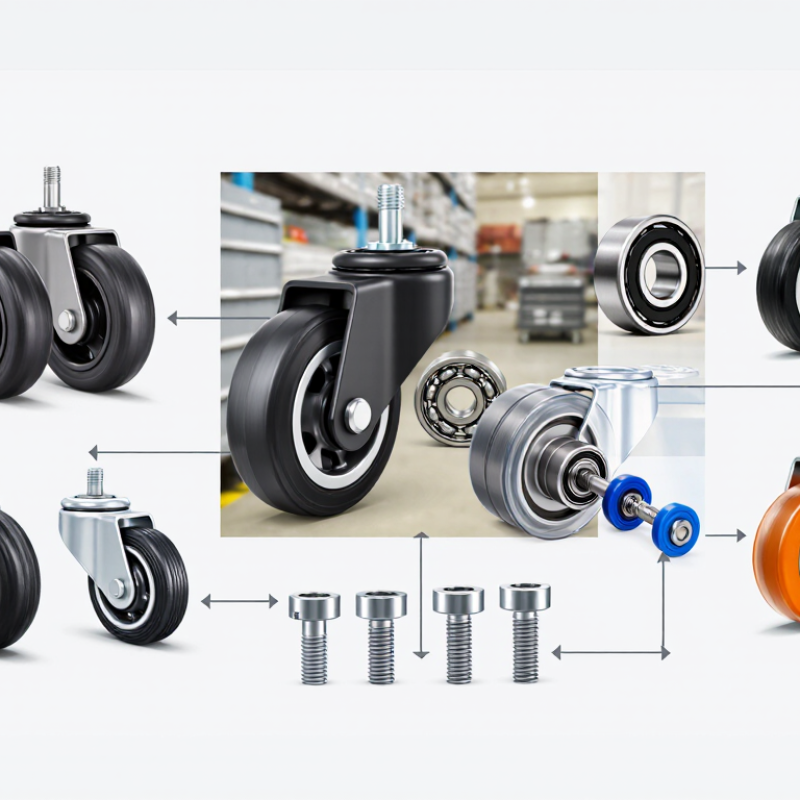
China Top Luggage Replacement Wheels Suppliers?

What Defines a Top Luggage Replacement Wheel Supplier in China

A top luggage replacement wheel supplier in China is defined by more than low pricing. It should provide stable materials, accurate molds, and repeatable quality. Allied Market Research valued the global luggage market at about USD 20.4 billion in 2021. It expects the market to reach USD 36.2 billion by 2031. That growth increases pressure on repair parts.

Experience matters during product testing. A reliable supplier should test wheel rotation, axle strength, noise, abrasion, and uneven-surface performance. Sample wheels should move smoothly across tile, concrete, and carpet. The supplier should also explain rubber hardness, bearing structure, and temperature resistance. ISO 9001 certification can support process control, but certification alone proves little. Factory records and test results matter more. I have seen attractive samples fail after repeated loading. That weakness deserves honest discussion.

Tips: Request pre-production samples, material specifications, inspection photos, and batch records. Ask for a rolling test with a stated load and distance. Confirm wheel diameter, axle length, mounting holes, and housing clearance. The International Air Transport Association reported 4.7 billion air travelers in 2024, showing how heavily luggage is used worldwide. Still, passenger volume does not guarantee replacement-wheel demand. Supplier evidence must connect market data with real product performance. An imperfect sample is useful if the supplier investigates it quickly.

Main Types of Luggage Replacement Wheels and Their Applications

China-based luggage replacement-wheel suppliers serve a broad repair and aftermarket market. Grand View Research valued the global luggage market at approximately USD 20.4 billion in 2023. It also expects continued growth through 2030. That demand supports replacement parts, not only complete luggage.

Spinner wheels are the most common type. Four wheels rotate independently and move smoothly through airports, hotels, and narrow shop aisles. They suit lightweight cabin cases and business luggage. Inline skate wheels use two larger wheels on each side. Their longer contact surface improves stability on rough pavement. They often fit heavy cases and outdoor travel bags. Rubber wheels reduce vibration and produce less noise. They work well on tile floors, elevators, and residential corridors. Polyurethane wheels balance abrasion resistance with quieter movement. A practical choice.

Wheel size matters. Small wheels save space but struggle on broken sidewalks. Larger wheels roll more easily, yet they may reduce internal packing space.

Replacement suppliers in China commonly offer single, double, and universal wheel assemblies. Buyers should check axle length, mounting-hole spacing, wheel diameter, and brake clearance. One missed measurement can ruin an otherwise good repair.

The American Pet Products Association is not relevant here; luggage data is more dependable. Mordor Intelligence estimates the luggage market will keep expanding during 2025–2030, although reports differ in market boundaries. That difference deserves attention.

Product testing should include rolling noise, load endurance, axle wear, and repeated turns. A wheel that feels smooth for five minutes may fail after several trips. Research and Markets also identifies durability and convenience as important luggage purchase factors. Suppliers should provide test records, material details, and fit drawings rather than relying on attractive samples.

Key Criteria for Evaluating Chinese Wheel Suppliers

Choosing a Chinese luggage wheel supplier requires more than comparing unit prices. Check wheel diameter, axle width, bearing type, and housing clearance against your luggage sample. Small differences can cause rubbing, wobbling, or difficult installation. Ask for production samples, not only catalog images. Test them on rough pavement, tiled floors, and loaded cases. Record noise, rolling resistance, and visible deformation.

An experienced supplier should explain materials clearly. Polyurethane hardness, rubber formulation, and metal axle quality affect comfort and service life. Request dimensional drawings, material data, and batch inspection records. A credible factory can show how it controls molds, incoming materials, and final assembly. Look for traceable lot numbers and repeatable measurements. Do not accept vague claims such as “premium quality.” Evidence matters more. Recent third-party test reports can support, but not replace, your own sample testing.

Supplier evaluation also depends on communication and corrective action. Send the same technical questions to several factories and compare response precision. Can they discuss tolerances, tooling ownership, minimum order quantities, and replacement rates? Ask how defects are isolated and reported. A factory visit or live video audit may reveal storage conditions and assembly discipline. Yet appearances are imperfect evidence. I once trusted a clean showroom and overlooked inconsistent axle measurements. That mistake delayed fitting tests. Build a pilot order with defined acceptance criteria, inspection photos, and delivery records. Leave room for doubt. A reliable supplier earns confidence through repeatable results, not confident promises.

Manufacturing, Quality Control, and Customization Capabilities

China’s top luggage replacement wheel suppliers distinguish themselves through controlled manufacturing, not attractive catalogs alone. Experienced factories inspect rubber hardness, axle dimensions, bearing fit, and mold accuracy during production. Automated molding improves consistency, while skilled technicians still check surface defects by hand. That balance matters. A wheel can look perfect yet wobble under load.

Quality control should include incoming material checks, first-article approval, and batch sampling. Reliable suppliers test rolling resistance, abrasion, impact strength, and repeated rotation. They should also record measurements and trace production lots. In my experience, practical testing reveals weaknesses that photographs never show. However, no factory is flawless. Small dimensional variations can appear after mold maintenance or material changes. Open reporting and corrective action are stronger signs of reliability than perfect claims.

Tips: Request samples from different production batches. Measure axle length and wheel diameter yourself. Ask for test records, inspection standards, and acceptable tolerance ranges. For customization, provide drawings, reference samples, target load, color requirements, and installation details. Suppliers can often adjust wheel materials, tread patterns, housings, bearings, and packaging. Custom designs may require new molds, which increase cost and lead time. A useful trial order should test fit, noise, turning smoothness, and wear on real luggage. Fancy features are not always improvements. Sometimes, a simpler wheel performs better.

China Top Luggage Replacement Wheels Suppliers? - Manufacturing, Quality Control, and Customization Capabilities
Supplier Capability Profile Primary Manufacturing Process Common Wheel Materials Typical Wheel Diameter Customization Capability Quality-Control Activities Typical MOQ Range Best-Fit Buyer
High-volume injection-molding manufacturer Precision injection molding with automated assembly TPU, TPE, PA, POM, ABS and PC 40–80 mm Custom tread pattern, hub geometry, axle diameter, color and logo placement Incoming material inspection, first-article approval, dimensional inspection and batch sampling 3,000–10,000 sets Large luggage brands and distributors
Integrated wheel-and-housing manufacturer Injection molding, die casting, CNC finishing and component assembly PU or TPU wheel, aluminum alloy, zinc alloy, PA and ABS housing 45–75 mm Complete replacement wheel assemblies, swivel housings, brackets and fasteners Torque testing, axle-fit verification, swivel rotation checks and visual inspection 1,000–5,000 sets OEM and aftermarket replacement-part programs
Small-batch OEM customization supplier CNC prototyping, soft tooling and low-volume molding TPU, TPE, nylon, ABS and aluminum 35–100 mm Rapid modification of wheel profiles, mounting holes, colors and packaging Prototype measurement, fit testing, sample approval and pre-shipment inspection 100–1,000 sets Start-ups, repair networks and specialty luggage projects
Silent-wheel specialist Precision molding with multi-stage bearing and axle assembly Soft TPU or PU tread, PA core and carbon-steel or stainless-steel axle 50–80 mm Low-noise tread design, bearing selection, wheel hardness and color matching Rolling-noise comparison, hardness testing, bearing rotation checks and load testing 1,000–5,000 sets Premium carry-on and cabin-luggage applications
Heavy-duty replacement-wheel manufacturer Reinforced injection molding, metal machining and mechanical assembly PU, nylon, PA, stainless steel and reinforced aluminum 60–100 mm Higher-load wheel cores, reinforced brackets, thicker axles and custom mounting patterns Static load testing, rolling endurance, axle deformation checks and corrosion inspection 500–3,000 sets Large suitcases, equipment cases and frequent-travel products
Aftermarket-compatible supplier Standardized molding and replacement-part assembly PU, TPU, ABS, PA and zinc alloy 40–75 mm Compatibility with common screw spacing, axle lengths, wheel widths and housing layouts Dimensional gauges, sample fitting, thread inspection and packaging checks 500–5,000 sets Repair shops, e-commerce sellers and luggage-service providers
Export-oriented contract manufacturer Molded-part production, assembly, quality documentation and export packing TPU, TPE, PU, PA, ABS, PC and metal alloys 40–100 mm Private-label packaging, multilingual labels, inspection plans and customized carton dimensions AQL sampling, production inspection, carton-drop checks and traceable batch records 1,000–10,000 sets Importers, wholesalers and international retail programs
Buyer verification points: Confirm material grade, wheel hardness, axle dimensions, bearing specification, rated load, rolling-endurance results, inspection level, tooling ownership, sample approval procedure and compliance documentation before placing a production order. The quantities and ranges shown are practical procurement benchmarks rather than audited claims for any specific company.

How to Select and Source the Right Chinese Supplier

Selecting Chinese luggage replacement-wheel suppliers starts with fit, not price. Measure axle diameter, wheel width, housing holes, and brake clearance. Request a drawing and a physical sample. A 2024 Mordor Intelligence luggage-market report projects steady growth through 2029, increasing demand for repair parts. That growth also attracts inconsistent factories. Ask whether the supplier manufactures wheels or only trades them. Request factory registration, production photos, and recent inspection records. Do not trust polished photos alone.

Build a comparison sheet covering rubber hardness, load rating, rolling noise, salt-spray resistance, and batch tolerance. For polyurethane wheels, ask for Shore A results and test conditions. Require a 20- to 50-piece pilot batch before placing a larger order. China’s 2023 Logistics Performance Index score was 3.7, according to the World Bank, but logistics quality still varies by region and forwarder. Confirm carton dimensions, export documents, lead time, and replacement terms in writing. A fast reply helps, but it does not prove capability.

Use independent inspection before shipment. Check wheel diameter with calipers, spin resistance by hand, and fit samples onto real luggage. Keep approval samples sealed and numbered. UN Comtrade data shows China remains a leading manufacturing and export base for travel goods, yet national data cannot validate one factory. That distinction matters. Ask for material declarations and traceability records. Small suppliers may lack formal testing equipment. That is a weakness. Third-party testing can sometimes close the gap. If dimensions drift, low pricing becomes expensive very quickly.

Article Source:

ICB_lOGO_2023